
Human skeletal diseases encompass a broad range of conditions that affect the bones, joints, and related structures in the human body. These conditions can be caused by genetic factors, environmental influences, aging, trauma, or a combination of these factors.
Chondrocytes are the cells found in cartilage, which is the flexible, rubbery tissue that cushions joints and forms structures like the nose and ears. In the context of skeletal development, chondrocytes play a critical role in the growth and maintenance of cartilage, particularly in the growth plates (also known as physis) of long bones.
Chondrocytes are central to skeletal growth and health, and their dysfunction can lead to a wide variety of bone and joint issues. Their study is vital for understanding how genetic and environmental factors influence height and bone development across different individuals.
The underlying variation in height is influenced by regulatory changes in chondrocytes, the cartilage cells that make up the growth plates of long bones. However, current understanding of the epigenetic regulation and gene expression of chondrocytes across the human skeleton is limited. As a result, unable to fully comprehend the basic regulatory mechanisms that control height biology.
Daniel Richard et al address this gap by creating comprehensive epigenetic and transcriptomic maps of chondrocytes sampled from different growth plates across developing human skeletons, uncovering novel regulatory networks that influence human bone and joint development. Next, by integrating these maps with height-related genome-wide association study (GWAS) signals, they disentangle the regulatory effects of skeletal element-specific versus globally acting variants on skeletal growth. This analysis highlights the crucial role of regulatory pleiotropy in driving height variation. Finally, given the high heritability of height, which makes it an ideal model for studying complex traits, they apply these datasets within an omnigenic model framework. This approach enables the discovery of new chondrocyte developmental modules and peripheral factors that shape height biology and skeletal growth.
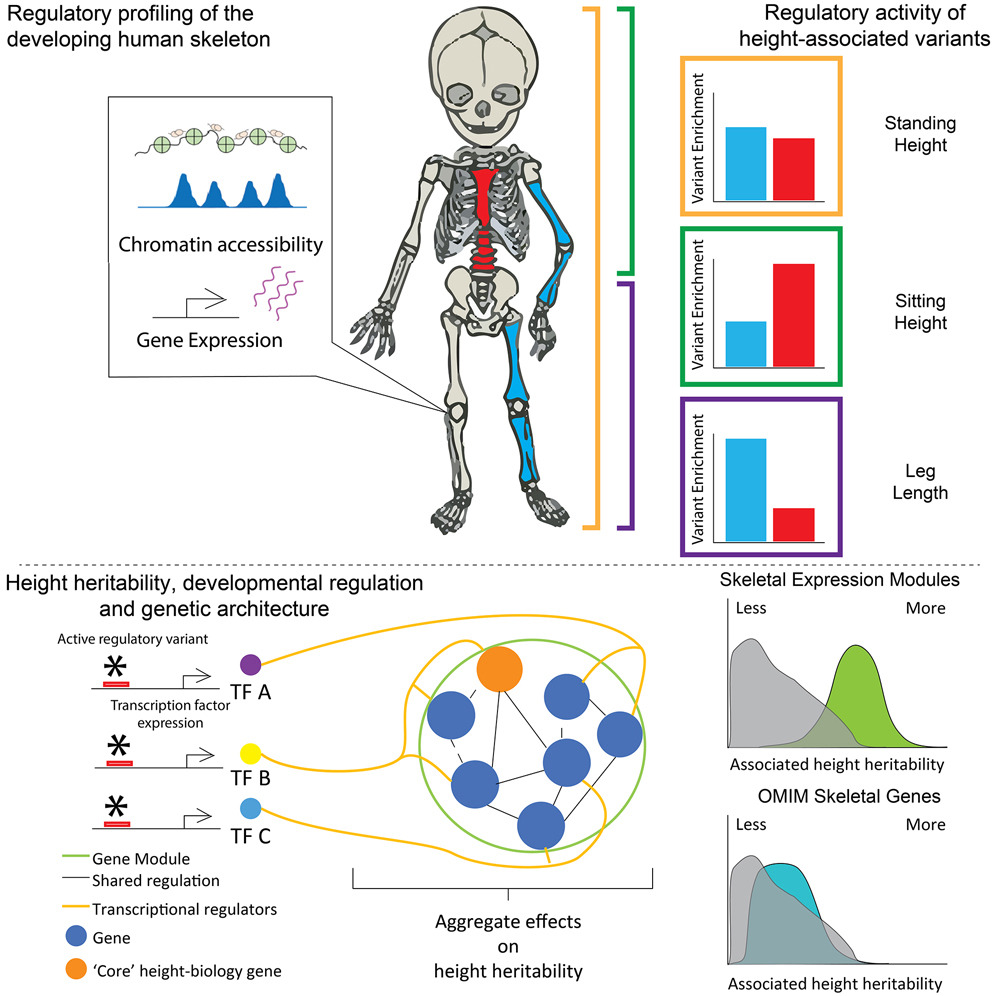
Resource: Functional genomics of human skeletal development and the patterning of height heritability.